



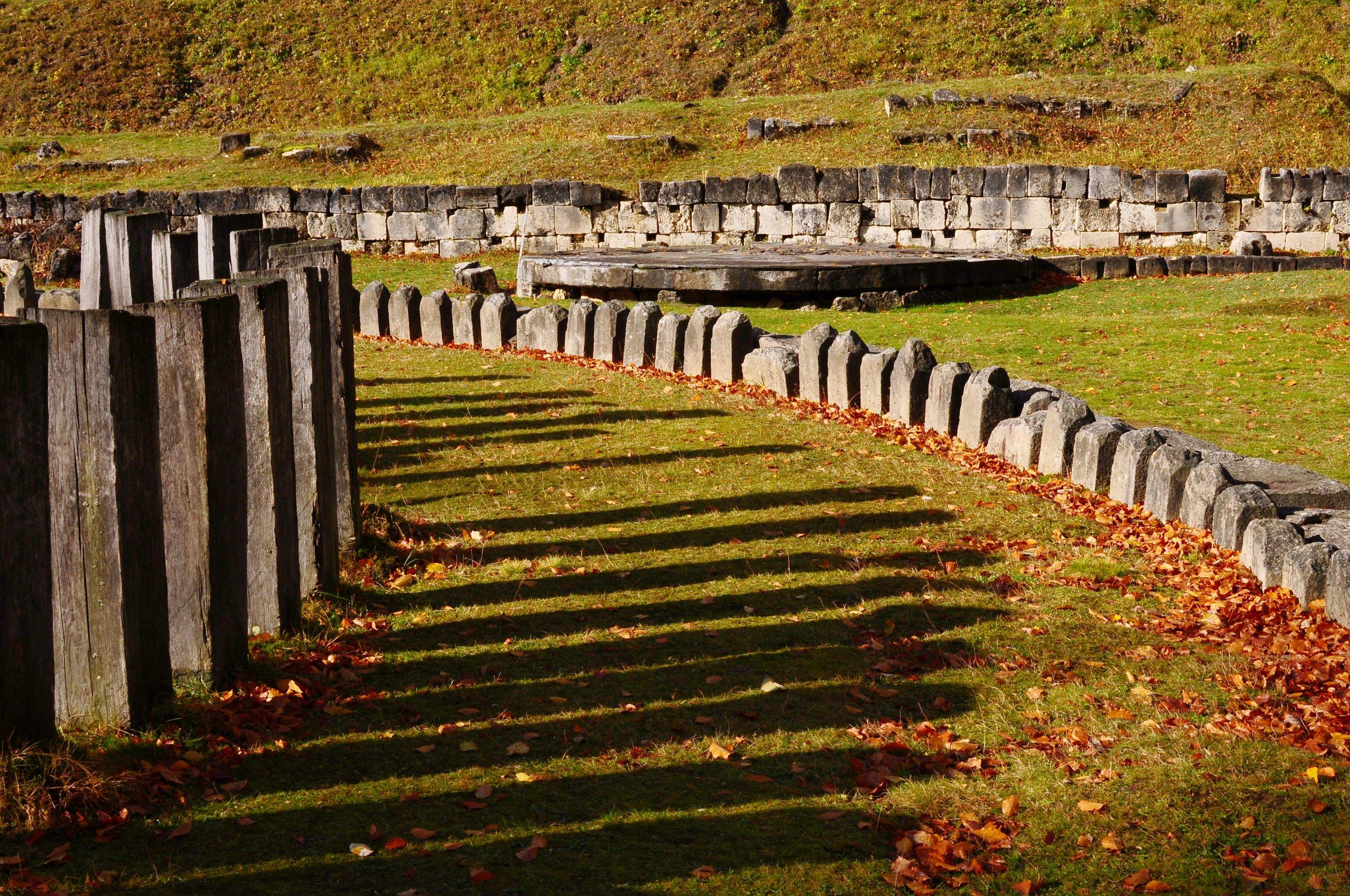





Soon the restoration works will begin, and to familiarize you better with what will happen on the site, we will present you some details and information from the General Technical Report, the one for Architecture and Landscape:
It is very important to know that before the launch of the project, intensive research activities were carried out to determine the detailed configuration, values, pathology and technical condition of the architectural-archaeological structures.
The foundation studies carried out during the DALI phase were completed in the first stage of the development of the DTAC documentation, with archaeological research and architectural interpretation, technical expertise, degradation relief plan, landscape research, evaluation of vegetation and interventions, in order to restore the enclosure wall, research on the characterization of the behavior of the existing soil in the site, the identification of local constructive resources compatible with it and some non-invasive solutions for pedestrian circulation surfaces.
All interventions are designed by the current principles of the restoration of archaeological architecture and the preservation of the local cultural landscape, by preserving and harmonizing the link between nature and the monument:
minimal intervention: compatibility of the materials used, reversibility – preserving the possibility of future interventions; differentiating added versus historical materials and elements.
In the first phase of the intervention, a series of activities aimed at the archaeological architectural elements that the designer, represented by the National Institute of Heritage, identified in the assignment of emergency restoration and conservation works, namely: ancient gates and roads and the enclosure wall, as well as the rectification of terraces that have been altered by various anthropogenic or natural factors.
In addition to these restoration interventions, the team of archaeologists also has a supervisory role throughout the execution of the works and carries out preventive archaeological research, which we told you about in the archeology vocabulary of July.
In the coming period, we will keep you updated with what will happen at Sarmizegetusa Regia, within the Capital of Dacia project - a living museum of European cultural heritage.
The Capital of Dacia - living museum of European cultural heritage is the name of the project submitted by Hunedoara County Council and carried out in partnership with Mihai Eminescu Trust and Møre & Romsdal County Council from Norway.
The Capital of Dacia - A LIVING MUSEUM OF THE EUROPEAN CULTURAL HERITAGE is financed with the support of EEA Grants 2014-2021 within the RO-CULTURE Programme.